Guide
How to Make Stable Buttercream for Professional Celebration Cakes
Creating a celebration cake that survives a summer wedding or a long delivery requires more than just mixing butter and sugar. This guide explores the professional techniques used by UK cake designers to achieve a structural finish that holds its shape and provides the perfect canvas for decoration.
The Golden Ratio for Stability
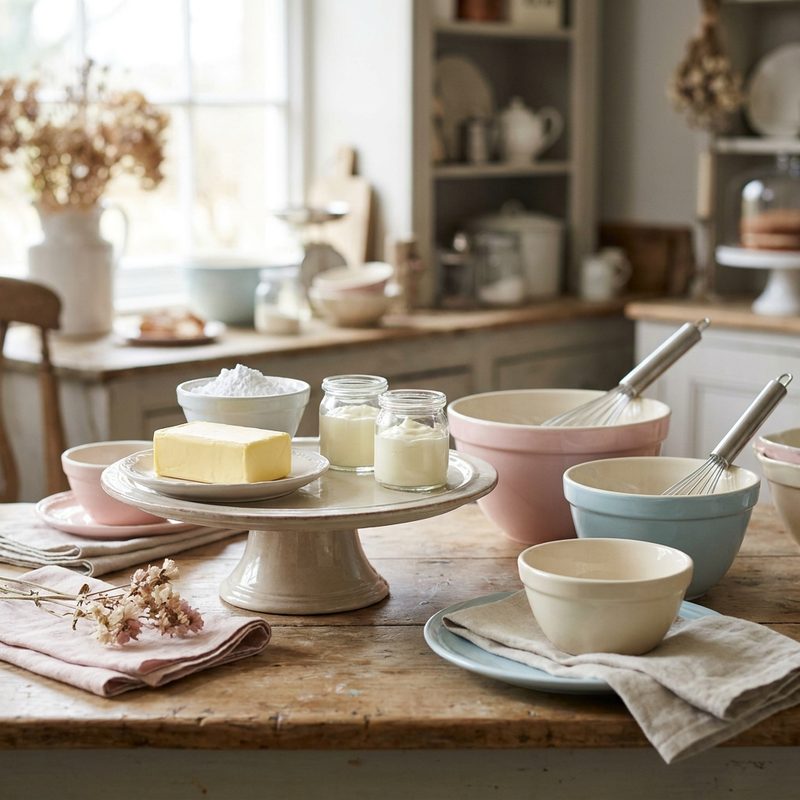
For a celebration cake that needs to hold its shape under the weight of fondant or heavy decorations, the standard British ratio is 1 part unsalted butter to 2 parts icing sugar (by weight). For example, 500g of butter to 1kg of icing sugar. This 'crusting' buttercream provides the structural integrity needed for sharp edges. Avoid using 'spreadable' butters from a tub, as these contain vegetable oils that remain soft at room temperature, leading to a cake that bulges or leans.
The Temperature of Success
Your butter must be at 'pliable' room temperature—soft enough to leave a thumbprint with light pressure, but still holding its block shape. If the butter is too greasy or melted, the buttercream will never reach the required stability. Conversely, if it is too cold, you will end up with lumps that clog your piping nozzles and ruin your smooth finish. In a cold British kitchen, you may need to give the butter a few 5-second bursts in the microwave, but be extremely careful not to melt it.
The Aeration and Beating Process
Start by beating the butter alone in a stand mixer using the paddle attachment (not the whisk) for at least 5 minutes. You want the butter to change from a yellow hue to a pale cream colour. Once pale, add your twice-sifted icing sugar in two stages. Beat on a low speed initially to avoid an 'icing sugar cloud', then increase to medium-high for another 5 minutes. This long beating time develops the texture, but be wary of adding too much air if you want a perfectly smooth finish for scraping.
Achieving the Professional Smooth Finish
Once your buttercream is combined and fluffy, you must remove the excess air bubbles to achieve that 'concrete' look. Switch to a low speed or use a silicone spatula to manually stir the buttercream for a few minutes, pressing it against the side of the bowl. This 'knocks out' the air pockets created by the stand mixer. For the final finish on the cake, use a metal palette knife dipped in hot water and dried; the heat lightly melts the surface of the butter, allowing for a glass-smooth result.
Managing Fluidity and Flavour
If the mixture is too stiff, add a single tablespoon of double cream or whole milk at a time. For stability, less is more. For flavouring, use high-quality extracts or concentrated pastes rather than liquid syrups, which can break the emulsion. If you are adding jam or curd for a filling, always pipe a 'stiff' buttercream dam around the edge of the sponge layer first to prevent the filling from leaking out and compromising the cake's exterior.